Venu Chitale: The Inspiring Story of India’s Pioneering BBC Broadcaster and Writer
From Wartime London to India's Independence Movement, the Remarkable Life of a Broadcasting Pioneer

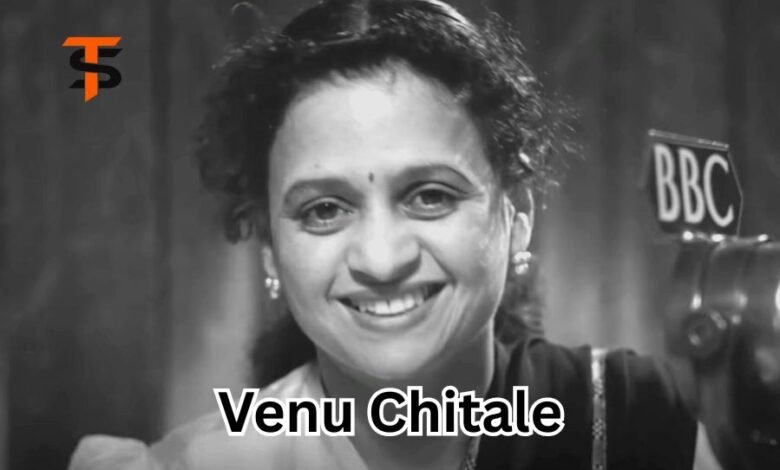
Venu Chitale was a pioneering Indian broadcaster, novelist, and humanitarian whose career connected the worlds of journalism, literature, and public service. She became one of the earliest Indian women to establish a significant broadcasting presence at the BBC during World War II, working alongside celebrated British author George Orwell. At a time when women from colonial India faced considerable barriers to international careers, Chitale built an influential public voice through radio programmes, cultural commentary, and writing.
Her work extended beyond broadcasting into India’s independence movement and humanitarian assistance following Partition, making her an important figure in twentieth-century Indian history.
This article explores Venu Chitale’s early life, education, wartime broadcasting, literary work, family, and lasting legacy.
Who Was Venu Chitale?
Venu Dattatreye Chitale, also known by her married name Leela Ganesh Khare, was an Indian radio broadcaster and writer associated with the BBC’s Eastern Service during the Second World War.
She was born on 28 December, with 1912 being the commonly accepted birth year, although some historical records give 1910. She died on 1 January 1995 in Mumbai, India.
Her professional life included journalism, radio presentation, translation, fiction writing, and humanitarian work. She also published under the pen name Weenoo.
Chitale is particularly remembered for helping introduce Indian voices and perspectives to international broadcasting during a period of political conflict and social transformation.
Early Life and Educational Background
Venu Chitale was born in Shirol, in the Kolhapur region of present-day Maharashtra, India. She grew up in a family of seven children and experienced the loss of her parents during childhood. Her older siblings and relatives subsequently helped raise the younger children.
Her education began at Huzurpaga, a well-known girls’ school in Pune. She later attended St Columba School in Bombay, now Mumbai, before studying at Wilson College.
During her studies, she developed a strong interest in literature, theatre, and intellectual discussion. One influential figure in her early life was Johanna Adriana Quinta Du Preez, a teacher who encouraged her academic and creative interests.
In 1934, Chitale travelled to England, where she studied Montessori educational methods at University College London. She later continued her studies in Oxford.
Living in Britain exposed her to international literature, different cultural traditions, and changing political ideas. These experiences would later influence her writing and broadcasting work.
Her Courage During World War II
The outbreak of World War II in 1939 changed the lives of millions, including Indian students and professionals living in Britain.
Rather than immediately returning to India, Chitale became involved in wartime civilian assistance. While living in Oxford, she volunteered with a local Air Raid Precautions organisation.
Her responsibilities included warning residents about potential bombing raids and assisting with emergency relief efforts.
This volunteer work demonstrated her commitment to helping others during dangerous circumstances. It also preceded a major turning point in her professional life.
As Britain expanded its international radio services, the BBC increasingly needed broadcasters who understood Indian languages and cultural traditions.
Chitale’s education, language abilities, and communication skills placed her in a position to contribute to this growing broadcasting network.
Venu Chitale and Her Groundbreaking BBC Career
Venu Chitale joined the BBC’s Indian Section of the Eastern Service in 1940, becoming an important contributor to broadcasts intended for audiences in India.
The service presented news, cultural discussions, literary programmes, and information about wartime Britain in several languages.
Her responsibilities extended beyond reading prepared material. She worked on scripts, translations, programme preparation, and spoken presentations.
Broadcasting in Marathi and English
Marathi was particularly important to her broadcasting identity. By presenting programmes in her mother tongue, Chitale helped make international news and British cultural experiences understandable to listeners in Maharashtra.
She also contributed to English-language broadcasts for British audiences through the BBC Home Service.
Her subjects ranged from wartime developments to everyday domestic concerns, reflecting the varied needs of listeners during the conflict.
Sharing Indian Cooking During Food Rationing
One distinctive aspect of her BBC career involved presenting Indian vegetarian cooking ideas to British audiences.
With meat rationed during the war, households were searching for affordable and nutritious alternatives.
In a January 1941 programme about wartime cooking without meat, Chitale explained how Indian culinary practices could help families prepare satisfying meals using limited ingredients.
Her broadcasts introduced practical ideas while challenging assumptions about Indian food and vegetarian diets.
Working Alongside George Orwell
One of the most notable chapters in Chitale’s professional life was her association with George Orwell, the author who later became internationally famous for Animal Farm and Nineteen Eighty-Four.
Orwell worked in the BBC’s Indian Section between 1941 and 1943, producing radio talks and literary programmes.
Chitale assisted him with programme-related responsibilities while developing her own broadcasting work.
Their professional association placed her within an important intellectual environment that included writers, journalists, political commentators, and international broadcasters.
She also contributed material to Talking to India, a collection associated with Orwell’s wartime broadcasting.
Her contribution concerning an exhibition of refugee children’s artwork illustrated how broadcasting could communicate human experiences beyond military developments and political announcements.
Although Orwell remains the better-known figure, Chitale’s work deserves recognition independently of their association.
She was a broadcaster and writer with her own interests, experiences, and professional achievements.
Balancing Broadcasting and India’s Independence Movement
Chitale’s position as an Indian broadcaster in wartime Britain involved complicated political circumstances.
Britain was fighting Nazi Germany while continuing to govern India under colonial rule. Indian intellectuals in Britain therefore faced questions about opposing fascism while also supporting Indian independence.
Around 1944, Chitale became associated with the India League in London, an organisation campaigning for Indian self-government.
The organisation was connected with political activist V. K. Krishna Menon and other supporters of Indian independence.
Her involvement reflected interests extending beyond broadcasting into political discussion and public advocacy.
At an All India Women’s Conference gathering in Hyderabad in 1945–1946, she encouraged greater understanding among Indians through knowledge of the country’s different languages.
Her emphasis on communication and mutual understanding remained consistent with the values evident in her radio work.
Returning to India and Helping Partition Refugees
Following India’s independence in August 1947, Chitale returned to Bombay in December of that year.
The period was marked by the humanitarian crisis accompanying the Partition of British India, which displaced millions of people.
Historical accounts describe her assisting Vijaya Lakshmi Pandit with relief work involving women and children in refugee camps in Delhi.
This work represented a transition from communicating about international events to directly supporting people affected by political upheaval.
Her humanitarian activities form an important part of her life story, demonstrating that her public contributions were not limited to journalism or literature.
Venu Chitale’s Literary Career and Published Books
Chitale continued writing after returning to India, drawing upon her knowledge of literature, history, and changing Indian society.
In Transit (1950)
Her first novel, In Transit, was published in 1950.
The book follows several generations of an Indian family and examines the effects of social change and the growth of nationalism during the early twentieth century.
It explores family relationships, traditional expectations, and the tensions created when younger generations begin questioning established customs.
Indian novelist Mulk Raj Anand wrote the book’s preface.
The novel remains an important example of fiction engaging with Indian society during the independence era.
Incognito (1993)
In 1993, Chitale published Incognito under the pen name Weenoo.
The novel continued aspects of her earlier fictional world, demonstrating her lasting commitment to creative writing.
She also contributed articles to publications, including the Marathi newspaper Navshakti, and occasionally broadcast on All India Radio.
Her literary output reflects a lifelong engagement with language, cultural identity, and social experience.
Marriage, Family, and Personal Life
In 1950, Venu Chitale married Ganesh Khare, a chartered accountant.
Following her marriage, she became known as Leela Ganesh Khare.
The couple had a daughter, Nandini Apte, whose recollections have contributed to the preservation of Chitale’s personal history.
Despite her international broadcasting career, Chitale maintained strong connections with Indian cultural and literary life.
She continued participating in intellectual and social activities after settling in India.
Her life illustrates how professional ambition, writing, family responsibilities, and public service could intersect during a period when women’s opportunities were undergoing significant change.
Why Venu Chitale’s Legacy Still Matters
Chitale died on 1 January 1995, leaving behind contributions to broadcasting, literature, and humanitarian service.
For many years, her achievements received considerably less public attention than those of some of her male broadcasting contemporaries.
Subsequent historical research helped restore awareness of her role in the BBC’s wartime Indian broadcasts.
The BBC revisited her life through historical features and a Marathi-language video in 2017.
On 28 December 2023, Google honoured her with a Doodle celebrating what it identified as her 111th birthday.
These recognitions introduced her achievements to new generations interested in women’s history, Indian journalism, and the development of international radio.
Her surviving broadcast scripts also provide valuable evidence of how Indian voices helped shape wartime communication between Britain and South Asia.
Conclusion
Venu Chitale’s life reflects determination, intellectual curiosity, and a sustained commitment to public service. From her education in Maharashtra and England to her wartime BBC broadcasts, she crossed geographical and cultural boundaries at a remarkable moment in history.
Her association with George Orwell, participation in India’s independence movement, humanitarian assistance after Partition, and literary achievements reveal a career far broader than broadcasting alone.
Today, Venu Chitale is remembered as an important early Indian woman broadcaster whose achievements helped expand the representation of Indian perspectives in international media.
Frequently Asked Questions About Venu Chitale
1. Who was Venu Chitale?
Venu Chitale was an Indian broadcaster, writer, and humanitarian who worked for the BBC during World War II. She became one of the pioneering Indian women associated with the BBC’s international radio broadcasts and contributed to literature and public service.
2. What was Venu Chitale’s connection with George Orwell?
Venu Chitale worked alongside George Orwell at the BBC’s Indian Section during World War II. She assisted with programme preparation and participated in broadcasting activities while Orwell worked as a talks producer.
3. When was Venu Chitale born, and when did she die?
Her commonly cited birth date is 28 December 1912, although some historical records indicate 1910. She died on 1 January 1995 in Mumbai, India.
4. Was Venu Chitale married, and did she have children?
Yes. She married chartered accountant Ganesh Khare in 1950 and subsequently became known as Leela Ganesh Khare. They had a daughter named Nandini Apte.
5. Which books did Venu Chitale write?
Her best-known works include In Transit, published in 1950, and Incognito, published in 1993 under the pen name Weenoo. Her fiction explored Indian society, changing traditions, and personal experiences across different historical periods.