
Rosemary Pitman: The Remarkable Life of Andrew Parker Bowles’ Second Wife
Beyond the royal headlines, discover the personal story of a British garden designer, devoted mother, and woman whose life was shaped by family, countryside traditions, and unexpected royal connections.

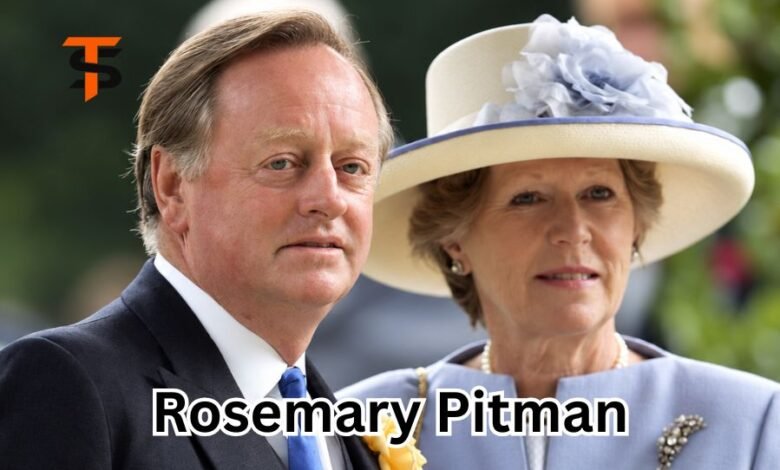
Rosemary Pitman was a British professional garden designer who became widely known as the second wife of Brigadier Andrew Parker Bowles, the former husband of Queen Camilla. Born Rosemary Alice Dickinson on 17 June 1940, she lived a largely private life despite her connections to Britain’s royal circles. Her 1996 marriage to Andrew drew public attention, but her personal story extended far beyond that relationship. She was a mother, an enthusiastic gardener, and a familiar figure in British countryside society. Her life ended on 10 January 2010, following a prolonged illness with cancer.
This article explores Rosemary Pitman’s life, family, career, marriage to Andrew Parker Bowles, royal connections, and death in 2010.
Quick Bio
| Detail | Information |
|---|---|
| Full Name | Rosemary Alice Pitman |
| Birth Name | Rosemary Alice Dickinson |
| Date of Birth | 17 June 1940 |
| Birthplace | Northumberland, England |
| Nationality | British |
| Profession | Professional Garden Designer |
| First Husband | Lieutenant Colonel John Hugh Pitman |
| Second Husband | Brigadier Andrew Parker Bowles |
| Marriage Date | 7 February 1996 |
| Sons | Henry, William, and Thomas Pitman |
| Stepchildren | Tom Parker Bowles and Laura Lopes |
| Date of Death | 10 January 2010 |
| Age at Death | 69 |
| Cause of Death | Cancer |
From Northumberland to a Life in the English Countryside
Rosemary Alice Dickinson was born in Northumberland, England, during the Second World War. Her parents were Robert Joicey Dickinson and Alice Penelope Barnett. Although she later became associated with prominent British social circles, relatively little information about her childhood has entered the public record.
Her early education and family circumstances have received considerably less attention than her adult relationships. Better documented is her enduring connection to country life, gardening, and horses.
These interests eventually became central to her professional and personal identity. Unlike many individuals associated with Britain’s royal establishment, Rosemary did not pursue a career built around public appearances or media attention.
Instead, she maintained a life centered on family commitments and activities that connected her to the countryside.
A Professional Identity Built Around Garden Design
Gardening Was More Than a Personal Hobby
One frequently overlooked detail about Rosemary Pitman is that she worked as a professional garden designer. Her occupation was separate from her marriage and the public interest surrounding the Parker Bowles family.
Garden design combines practical planning with an understanding of plants, landscape characteristics, and the changing seasons. Designers must consider how an outdoor space will function and develop over time, rather than concentrating only on its immediate appearance.
Rosemary’s profession reflected her interest in gardens and rural environments. Although detailed records of individual commissions are not widely available, published accounts of her life consistently mention her work as a garden designer.
Her Connection to Wiltshire
Rosemary spent much of her adult life in Wiltshire, a county known for its villages, countryside, historic houses, and gardens.
The region suited her interests. Her enthusiasm for gardening and horses also reflected the traditional country pursuits common among the military and social circles in which she moved.
While her marriage brought her greater public recognition, garden design remained an important part of her identity.
Her First Marriage and Family Responsibilities
Before meeting Andrew Parker Bowles, Rosemary married Lieutenant Colonel John Hugh Pitman in 1961. Her first husband served in the British Army, placing their family within the routines and responsibilities associated with military life.
Their marriage lasted about thirty years before they divorced in 1991.
Rosemary Pitman’s Children
Rosemary and Hugh Pitman had three sons:
- Henry John Pitman, born in 1962.
- William Hugh Pitman, born in 1965.
- Thomas Edward Pitman, born in 1969.
Her children remained an important part of her family history. Although Rosemary later became connected to the royal family through marriage, her relationship with her sons belonged to an earlier chapter of her life.
A Blended Family Through Her Second Marriage
When Rosemary married Andrew Parker Bowles, she also became stepmother to his two children with Camilla.
These were Tom Parker Bowles, a food writer and critic, and Laura Lopes, who has worked in the arts.
The relationship brought together two established families, each with its own background and personal history.
The 1996 Wedding That Brought Rosemary Into Royal Circles
Rosemary married Brigadier Andrew Parker Bowles on 7 February 1996 at Chelsea Register Office in London.
The wedding took place about a year after Andrew divorced Camilla Shand, whom he had married in 1973.
Why Their Marriage Attracted Attention
Andrew Parker Bowles was already well known because of his military career, polo connections, and previous marriage to Camilla. His former wife had a longstanding relationship with Charles, then Prince of Wales, which had generated considerable public discussion.
Consequently, newspapers and royal observers took interest in Andrew’s second marriage.
However, Rosemary and Andrew did not build their married life around constant publicity. They shared interests in country pursuits and appeared together at social occasions, including horse racing events.
Their marriage lasted nearly fourteen years, ending with Rosemary’s death in January 2010.
The Unexpected Connection Between Rosemary Pitman and Queen Camilla
Rosemary’s relationship with the British royal family was indirect but historically interesting.
Andrew Parker Bowles and Camilla divorced in 1995, although they continued to share family connections through their children.
Camilla subsequently married Prince Charles on 9 April 2005. Andrew and Rosemary attended the wedding, demonstrating that the former spouses had maintained an amicable public relationship.
The families were also connected through social occasions and shared acquaintances.
A Wedding That Reflected Continued Family Ties
Charles and Camilla’s wedding was a significant event in British royal history. Rosemary’s attendance alongside Andrew reflected the unusual but established connections between the couples.
She was not a member of the royal family by title or blood. Nevertheless, her marriage placed her in a social network closely connected to senior royals.
Understanding this distinction helps explain her public recognition without exaggerating her position.
Horses, Racing, and a Relatively Private Lifestyle
Beyond her professional interest in garden design, Rosemary enjoyed horses and equestrian activities.
She shared this interest with Andrew Parker Bowles, whose association with polo and horse racing was well established.
The couple appeared together at racing events, including Cheltenham, where they were photographed attending.
Such appearances offered occasional glimpses of their married life, but they represented only a small part of Rosemary’s wider experiences.
Why She Remained Outside the Celebrity Spotlight
Rosemary’s public profile largely centered on major family occasions and her husband’s relationships. She was not known for television work, political activity, or a public campaign.
As a result, detailed information about her private routines, finances, and individual professional projects is limited.
Rather than filling those gaps with speculation, her biography is best understood through the documented facts about her family, profession, marriage, and interests.
Rosemary Pitman’s Final Years and Death in 2010
Rosemary died on 10 January 2010, aged 69, after experiencing cancer for several years.
Contemporary death notices reported that she passed away peacefully at home. British newspapers covered her death because of the Parker Bowles family’s royal connections.
Funeral in Malmesbury
Her funeral took place on 18 January 2010 at St Aldhelm’s Catholic Church in Malmesbury, Wiltshire.
Princess Anne attended, reflecting Andrew Parker Bowles’ longstanding connections with the royal family.
The family later held a memorial and thanksgiving service at the Guards Chapel in London in March 2010, with Camilla among the attendees.
These occasions brought together relatives, friends, and people who knew Rosemary at different stages of her life.
Five Frequently Asked Questions About Rosemary Pitman
1. Who was Rosemary Pitman?
Rosemary Pitman was a British professional garden designer best known as Brigadier Andrew Parker Bowles’ second wife. Born in 1940, she had three sons from her first marriage and remained married to Andrew from 1996 until she died in 2010.
2. Was Rosemary Pitman related to Queen Camilla?
She was connected to Queen Camilla through marriage, rather than by blood. Rosemary married Andrew Parker Bowles, who had previously been Camilla’s husband. The couple also maintained social and family connections.
3. What was Rosemary Pitman’s profession?
She worked as a professional garden designer. Gardening was an important part of her life, although detailed information about specific projects is not widely documented.
4. How many children did Rosemary Pitman have?
Rosemary had three sons, Henry, William, and Thomas, with her first husband, John Hugh Pitman. She also became stepmother to Tom Parker Bowles and Laura Lopes after marrying Andrew Parker Bowles.
5. When and how did Rosemary Pitman die?
She died on 10 January 2010, aged 69, after a prolonged illness with cancer. Her funeral was held in Malmesbury on 18 January 2010, followed by a memorial service in London.
Conclusion: Remembering Rosemary Pitman Beyond Her Royal Connections
Rosemary Pitman is often remembered because of her marriage to Andrew Parker Bowles and her indirect connection to Queen Camilla. Yet her life included much more than appearances within Britain’s royal social circles.
She was a professional garden designer, a mother, and a woman whose interests centered on the English countryside. Her marriages, family relationships, and gardening career shaped a life largely lived away from public attention.
Her story offers a fuller understanding of someone whose name remains connected to modern royal history, while recognizing that her personal and professional identity stood on its own.