
Alan Hammond: The Distinguished Berkeley Professor Advancing Probability and Mathematical Science
Exploring the academic journey, groundbreaking research, professional achievements, and scientific contributions of a respected mathematics professor.

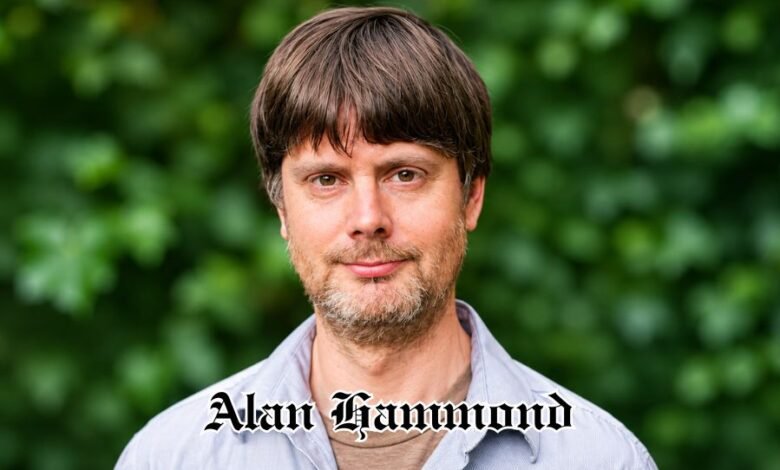
Alan Hammond is a professor of mathematics and statistics at the University of California, Berkeley, recognized for his research in probability theory, statistical mechanics, and mathematical models of randomness. His academic work explores how complex systems behave when uncertainty, probability, and physical interactions influence their development. With an educational background that includes the University of Cambridge, the University of Oxford, and UC Berkeley, Hammond has established a significant career in mathematical research. His contributions to random processes, phase transitions, and KPZ universality have earned him recognition in the international mathematics community.
This article examines Alan Hammond’s educational background, academic appointments, important research contributions, professional recognition, and influence on modern probability theory.
Quick Bio
| Field | Details |
|---|---|
| Full Name | Alan Hammond |
| Date of Birth | 17 September 1976 |
| Nationality | British |
| Profession | Mathematics and Statistics Professor |
| University | UC Berkeley |
| Education | Cambridge, Oxford, UC Berkeley |
| PhD | Statistics, 2005 |
| Research | Probability Theory, Statistical Mechanics |
| Recognition | IMS Fellow, 2021 |
Alan Hammond’s Educational Background and Academic Foundations
Alan Hammond developed his advanced mathematical training through several internationally respected universities. His academic qualifications reflect a sustained interest in theoretical mathematics and the mathematical foundations of probability.
He completed a Bachelor of Arts in Mathematics at the University of Cambridge in 1998, achieving first-class results in the first two parts of the Mathematical Tripos. In 1999, he completed Cambridge’s advanced mathematical studies program and received a distinction in Part III.
Hammond then attended the University of Oxford, where he earned an MSc by Research in 2001 under the supervision of mathematician Terry Lyons.
He continued his academic journey at the University of California, Berkeley, where he earned a PhD in Statistics in 2005. His doctoral advisers were Yuval Peres and Fraydoun Rezakhanlou, both associated with significant research in probability and mathematical analysis.
These educational experiences provided the foundation for his later investigations into complex random systems.
From International Research Positions to UC Berkeley
Following his doctorate, Alan Hammond began developing an international academic career.
Between 2005 and 2006, he worked as a postdoctoral fellow in the Department of Mathematics at the University of British Columbia. He subsequently held a Courant Instructor position at New York University’s Courant Institute of Mathematical Sciences from 2006 to 2009.
His career also included a visiting appointment at the École Normale Supérieure in Paris and academic work at the University of Oxford.
From 2010 to 2014, Hammond held a research fellowship at Oxford supported by the UK’s Engineering and Physical Sciences Research Council.
His Appointment at the University of California, Berkeley
In 2014, Alan Hammond joined UC Berkeley as an associate professor, holding a joint appointment in the Departments of Mathematics and Statistics.
He continued in that position until 2019, when he became a full professor.
His appointment places him within Berkeley’s established probability research community, where mathematical and statistical techniques are applied to questions involving randomness, geometry, and physical systems.
Understanding Alan Hammond’s Research in Probability Theory
Hammond’s research centers on mathematical probability, particularly its relationship to statistical mechanics.
Probability theory provides mathematical tools for understanding uncertain events. Beyond calculating the likelihood of individual outcomes, researchers investigate how complicated collections of random events behave.
Hammond studies systems in which many local random interactions combine to produce larger patterns. His work seeks rigorous mathematical explanations for these patterns rather than relying exclusively on numerical simulations or experimental observations.
Statistical Mechanics and Random Systems
Statistical mechanics examines how the collective behavior of many interacting components produces large-scale properties.
For example, mathematical models can describe how a physical system changes from one phase to another or how boundaries between different phases behave.
Hammond investigates such questions through probability theory, including models involving phase boundaries, random walks, and phase transitions.
These investigations contribute to the theoretical understanding of how randomness interacts with physical and geometric constraints.
KPZ Universality and Random Growth
Another major area of his research concerns Kardar-Parisi-Zhang (KPZ) universality.
KPZ universality describes mathematical patterns that appear in certain models of randomly growing surfaces and interfaces. Different microscopic systems can display related large-scale statistical behavior.
Hammond’s work examines the geometry and fluctuations of these systems, including models connected with last passage percolation.
Why KPZ Research Matters
Researchers study KPZ-related models because they offer a framework for understanding how randomness and local interactions influence growth over time.
Hammond has investigated the mathematical properties of these systems through detailed probability estimates, geometric methods, and scaling-behavior analysis.
His research also connects to Airy processes, random polymers, and stochastic models.
Important Mathematical Publications and Contributions
Alan Hammond has contributed to numerous research publications addressing challenging questions in modern probability.
His academic work includes investigations of self-avoiding walks, Brownian motion, random interfaces, and particle systems.
A significant publication, Brownian Gibbs Property for Airy Line Ensembles, was written with Ivan Corwin and published in 2014.
Other research includes work on the geometry of last passage percolation and mathematical bounds for self-avoiding walks.
He has also studied coagulating particle systems and their relationship with partial differential equations, including the Smoluchowski equation.
These publications demonstrate the breadth of his research, connecting probability with mathematical physics, geometry, and analysis.
Professional Recognition and Academic Honors
Established mathematical institutions have recognized Hammond’s research achievements.
In 2021, he was elected a Fellow of the Institute of Mathematical Statistics (IMS). The fellowship recognized his advances on difficult problems in probability and statistical physics, including research on self-avoiding walks.
His other professional appointments and distinctions include a 2019 Miller Research Professorship at UC Berkeley and a 2021 Simons Fellowship in Mathematics.
He also served as an MSRI Research Professor during a 2021 program focused on universality, random matrix theory, and interacting particle systems.
His research has received support through grants from organizations including the National Science Foundation.
Teaching, Collaboration, and Research Mentorship
Alongside his published research, Alan Hammond has participated in graduate education and academic mentorship.
His academic CV documents supervision of doctoral researchers, including Sourav Sarkar, Milind Hegde, and Jacob Calvert.
His research collaborations have involved mathematicians investigating probability, random geometry, and statistical mechanics.
Hammond has also contributed to the wider academic community through invited lectures, research seminars, and conference organization.
These activities form an important part of his professional work, supporting the exchange of mathematical ideas and the development of new researchers.
Conclusion: Alan Hammond’s Contributions to Mathematical Research
Alan Hammond has developed a distinguished academic career through his investigations into probability, statistical mechanics, and the mathematical behavior of random systems. From his early education at Cambridge and Oxford to his research and teaching at UC Berkeley, his professional journey reflects a sustained commitment to rigorous mathematical inquiry.
His publications, international collaborations, research mentorship, and professional recognition highlight his contributions to modern probability theory. His work continues to provide valuable insights into the mathematical structures that govern randomness, growth, and complex physical systems.
(FAQs)
1. Who is Alan Hammond?
Alan Hammond is a professor in the Departments of Mathematics and Statistics at the University of California, Berkeley. He specializes in probability theory and rigorous mathematical approaches to statistical mechanics, with research involving random systems, geometric probability, and KPZ universality.
2. What is Alan Hammond known for?
He is known for his contributions to probability theory, particularly research concerning random growth models, self-avoiding walks, phase transitions, and the mathematical structure of stochastic systems.
3. Where did Alan Hammond study?
He studied mathematics at the University of Cambridge, completed an MSc by Research at the University of Oxford in 2001, and earned his PhD in Statistics from UC Berkeley in 2005.
4. Has Alan Hammond received any major academic awards?
Yes. He became a Fellow of the Institute of Mathematical Statistics in 2021. His academic distinctions also include a Simons Fellowship in Mathematics and a Miller Research Professorship.
5. When did Alan Hammond become a professor at UC Berkeley?
He joined UC Berkeley as an associate professor in 2014 and was promoted to full professor in 2019. His appointment spans both the Mathematics and Statistics departments.