
Pilfer Word Game: The Ultimate Guide to Playing Smarter, Stealing Words, and Winning
Discover how this fast-paced vocabulary challenge combines clever word-building, quick thinking, and competitive strategy into an exciting multiplayer experience.

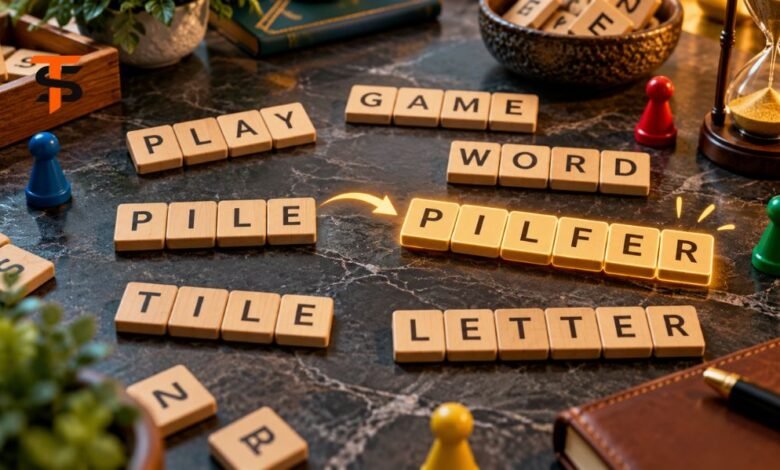
The Pilfer Word Game adds a competitive twist to traditional word puzzles by letting players create words and steal them from opponents. Unlike ordinary spelling games, where completing a word usually means securing your achievement, Pilfer keeps every word vulnerable to clever transformations. Players must think quickly, spot letter combinations, and respond before opponents find better opportunities. Merriam-Webster developed Pilfer as a browser-based game for people who enjoy anagrams, vocabulary challenges, and strategic competition. Its simple concept hides a surprisingly demanding experience that rewards both linguistic creativity and careful observation.
This article explains the Pilfer Word Game, including its rules, gameplay, scoring system, and word-stealing strategies. It also shares useful tips to help beginners improve their vocabulary, avoid common mistakes, and win more games.
What Is the Pilfer Word Game?
Pilfer is a real-time, competitive word-building game where players create valid English words from letters on a shared board. The unusual feature is that words already claimed by one player can become targets for another.
Rather than simply forming as many individual words as possible, participants must continuously examine existing words and identify opportunities to transform them.
The game combines several familiar skills, including spelling, vocabulary recognition, anagram solving, and rapid decision-making. However, its stealing mechanic creates a different experience from conventional word puzzles.
A player with a strong word collection can suddenly lose ground when an opponent finds a clever transformation.
This unpredictability makes every round competitive until the final moments.
How to Play the Pilfer Word Game
The basic gameplay is straightforward, but winning consistently takes practice.
Step 1: Start a Game
Players can access Merriam-Webster’s Pilfer through a compatible web browser. The game lets you compete against other players or computer-controlled opponents.
After selecting a game mode, players enter a game where letters gradually appear.
The objective is to collect more points by creating and claiming words before opponents can take them.
Step 2: Create Words From Available Letters
As new letter tiles appear, players examine possible combinations and enter valid words.
For example, if the available letters include C, A, R, and E, a player might create CARE or RACE, depending on the combinations still available.
Recognizing a word quickly matters because opponents are examining the same collection of letters.
A useful strategy is to identify several possible combinations rather than concentrating exclusively on one complicated word.
Step 3: Steal Existing Words
The most distinctive element of Pilfer is the ability to steal another player’s word by transforming it into a different valid word using additional available letters.
Suppose an opponent owns CARE and the letter T becomes available. You could rearrange those letters into TRACE or REACT.
The newly created word becomes yours, while your opponent loses the original word.
This mechanism changes the competitive balance and encourages players to keep watching words that have already been claimed.
Step 4: Continue Until the Round Ends
In Merriam-Webster’s version, a round features 60 letter tiles that appear over time. Players continue creating and stealing words as the game progresses.
Following the final letters, players receive a brief opportunity to make additional moves before the results are determined.
The goal is to finish with the stronger score, not simply to create the first word.
Understanding Word-Stealing Rules and Scoring
Pilfer rewards players who understand the difference between making a valid word and making a valid steal.
In Merriam-Webster’s version, words can contain three or more letters. A steal generally requires an existing word to be extended using additional available letters.
Players cannot simply attach an S to create an ordinary plural as an easy stealing shortcut.
How Scoring Works
The game rewards the letters represented by words that players currently control. As a result, longer words offer opportunities to accumulate more points.
However, length alone does not guarantee success.
A valuable word can become a liability when an opponent finds a possible extension. Losing one long word may change the score significantly.
This creates an interesting balance between scoring immediately and protecting your words.
Players should check the rules displayed in their particular version, since other games using the Pilfer name may have different minimum word lengths or stealing conditions.
Smart Strategies to Improve Your Winning Chances
Vocabulary knowledge helps, but experienced players also develop habits that improve speed and decision-making.
Recognize Common Letter Patterns
Instead of examining every letter independently, look for familiar combinations such as TH, CH, ST, SH, and ING.
These patterns can help reveal longer words quickly.
Recognizing common prefixes and suffixes also makes it easier to identify transformations when additional letters become available.
Watch Your Opponent’s Words
Many beginners focus almost entirely on unused letters. This causes them to overlook valuable stealing opportunities.
Monitor words already claimed by opponents and consider how those words could change when another letter appears.
For example, STAR can become TEARS when you add an E and rearrange the letters.
Thinking ahead prepares you to act immediately when the required letter becomes available.
Balance Speed With Accuracy
Typing quickly helps, but careless guesses can waste valuable attention.
Developing reliable recognition patterns is generally more effective than entering random combinations.
Practice With Anagrams
One useful training exercise involves taking an ordinary word and finding different arrangements of its letters.
For example, LISTEN and SILENT contain the same letters. Although this isn’t necessarily a valid steal on its own under rules that require an extra letter, recognizing anagrams strengthens the mental flexibility needed for more complex transformations.
Regular practice can make these connections feel increasingly natural.
Why Pilfer Feels Different From Other Word Games
Many vocabulary games emphasize either finding hidden words or constructing words for points. Pilfer introduces the possibility that another player can claim your completed work.
This makes the competitive experience unusually dynamic.
In Scrabble, players typically focus on turn-based placement and board positioning. Wordle challenges players to identify a hidden word in a limited number of guesses.
Pilfer instead emphasizes simultaneous observation, rapid word construction, and tactical stealing.
There is also a psychological element. Players may become attached to particularly valuable words, yet those words can disappear from their possession almost instantly.
A successful player must therefore remain flexible, accepting losses while searching for new opportunities.
Common Mistakes That Beginners Should Avoid
New players sometimes make decisions that limit their chances of winning.
One common mistake is concentrating exclusively on long, complicated words. Although larger words can be valuable, searching for them may allow opponents to claim several easier combinations.
Another mistake is ignoring words that opponents already control. These words can become some of the most valuable opportunities on the board.
Players also occasionally overlook simple spelling variations or forget that an extra letter may completely change an existing word.
Finally, treating every stolen word as a major setback can interrupt concentration. The game changes rapidly, and recovering from a stolen word is often possible through another successful move.
Maintaining awareness and responding calmly are useful competitive habits.
What Makes Pilfer an Enjoyable Vocabulary Challenge?
Pilfer offers more than a conventional spelling exercise because it combines multiple mental activities within a single game.
Players repeatedly search for patterns, retrieve familiar words from memory, and adapt when new letters appear.
The competitive format also encourages concentration. A moment of distraction can mean missing a valuable word or an opportunity to steal.
For people who enjoy language puzzles, these mechanics provide an entertaining way to practice word recognition, spelling accuracy, and flexible thinking.
Although vocabulary games aren’t a guaranteed way to improve cognitive health, they can offer meaningful intellectual engagement and enjoyable mental stimulation.
Conclusion
The Pilfer Word Game turns ordinary word-building into an energetic competition where vocabulary, timing, and strategy influence every move. Its greatest attraction is the opportunity to transform an opponent’s word into something new, creating unexpected changes in the score.
Learning the basic rules is simple, but becoming a stronger player requires practice, sharper observation, and better recognition of letter combinations. For anyone who enjoys anagrams and competitive spelling challenges, Pilfer provides an engaging way to test language skills while experiencing a genuinely unpredictable word game.
(FAQs)
1. Is the Pilfer Word Game free to play?
Merriam-Webster offers Pilfer as a browser-based word game. Players can access its game page without purchasing a traditional board game. Any current access requirements should be checked on the game interface.
2. Can you play Pilfer against a computer?
Yes. Merriam-Webster has offered computer-controlled opponents alongside opportunities to compete with other players. This lets you practice without arranging a multiplayer match with friends.
3. How do you steal words in the Pilfer Word Game?
You steal a word by transforming an opponent’s existing word into another accepted word using the applicable letter rules. In Merriam-Webster’s version, this generally involves adding available letters and rearranging the combination.
4. What is the best strategy for winning Pilfer?
The most useful strategy is to combine quick word recognition with careful observation of opponents’ words. Recognizing anagrams, common letter patterns, and possible extensions can help players identify valuable moves before their competitors.
5. Is Pilfer similar to Scrabble or Wordle?
Pilfer shares vocabulary and spelling elements with both games, but its gameplay is different. Unlike Wordle’s guessing format or Scrabble’s turn-based structure, Pilfer features real-time competition in which opponents can steal words through valid transformations.
